
On a misty morning in October, I drove up the 101 to the Peg House, an iconic restaurant, community hub, and occasional venue just North of Leggett California. Right next to the restaurant is an old gas station that has been recently revitalized as a dispensary called Emerald Sasquatch. I stopped in to visit with Will and Faun, siblings and the owner operators of this dispensary and their farm brand Grandpa’s Ganj. They specialize in selling local cannabis from Northern Mendocino and Southern Humboldt counties. We had a fantastic conversation about history, culture, and what makes this region so unique and important to California’s cannabis story.
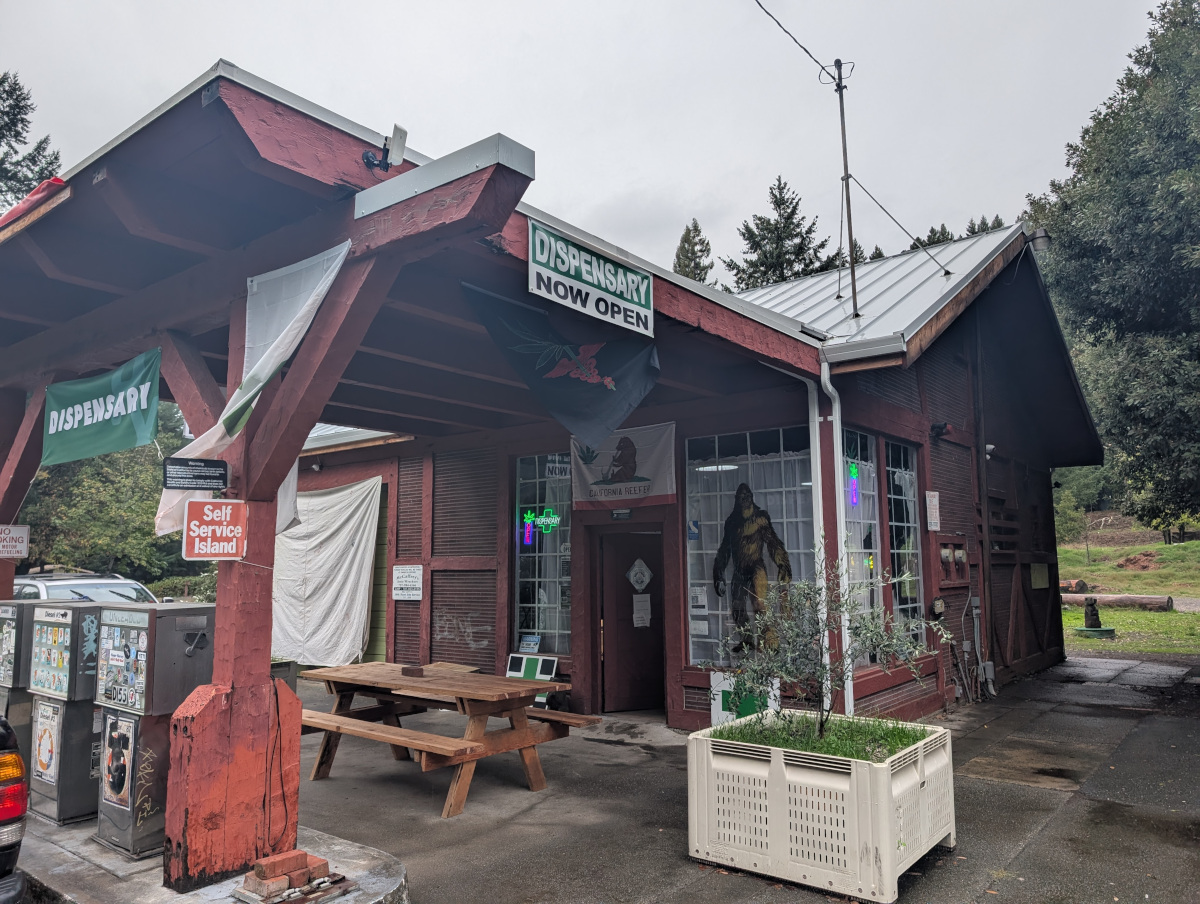
Emerald Sasquatch at the old Peg House gas station
What’s your background?
We were born in the early 80’s, and Will attended Humboldt State University up in Arcata. Our family has been here forever. Our grandparents moved here from Utah by way of Colorado, where our grandpa owned transportation rights and made money giving “rides” to whiskey runners. He came out to California in pursuit of a deal to buy a mill, but that fell through so he ended up as a logger. He raised our father and uncle here as loggers as well.
Our dad is called Chucky, and our uncle is Fred. They both got out of Vietnam in the 70’s. Unfortunately, Fred was badly injured there in an explosion. Our dad served multiple naval tours on the KittyHawk carrier. He’s got some stories from back then, one was about this ship called the Sumpter. The official records say that ship was sold, but our dad has stories of helping strip and scuttle it off Washington state. He still has some tools from the Sumpter with the ship's name on them, so there was clearly something going on behind the scenes there.
After the war, Chucky and Fred stayed here working as loggers until they eventually started growing cannabis as the demand increased postwar. The Emerald Triangle was a haven for veterans. They came up here to escape society and find peace, since PTSD wasn’t really diagnosed or treated at that point. Our mom was from Florida, and she was driving around the country as part of the hippie movement. She had some friends in this area, so she came to visit them and ended up staying here, which is where she eventually met our dad. There’s a funny story about those friends. They knew a lady nearby who used to foster old Hollywood animals. She had an elephant and a bear and a few other animals, and she ran it like a tourist attraction. When the elephant died the owner buried it on her property. A few years ago someone accidentally dug up the elephant, and they thought they had found dinosaur bones!
Before cannabis was the main focus in this region, it was logging. Since you grew up with parents who were loggers can you describe to me the history of that and what the transition from logging to weed was like?
Logging was huge- the first time that San Francisco burned down they logged from the Bay up to Fort Bragg to rebuild it, and the second time they logged all the way up through Humboldt and stayed to log the rest. The size of the trees up here meant it took tons of loggers and equipment to cut and move them. All these little towns around here like Leggett used to be much larger, full of the loggers and their families and the people who served them.
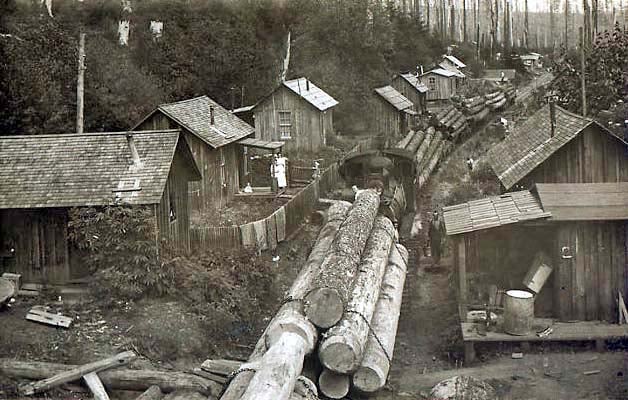
A logging camp along the Albion River Railway, date unknown (Image Credit: Colyton Old Pictures via Facebook)
Usal had an opera house, Leggett was as large as Willits is now, and Little River was huge. There were narrow gauge railroads or spurs off the main tracks all over the area for moving logs to the mills, and the towns sprang up around the mills. The Eel River used to have log barges on it when the water was high in the right seasons. In addition to logging, people also used to harvest tan oak bark from the tan oak trees and ship it down to the Bay to be used for tanning leather.
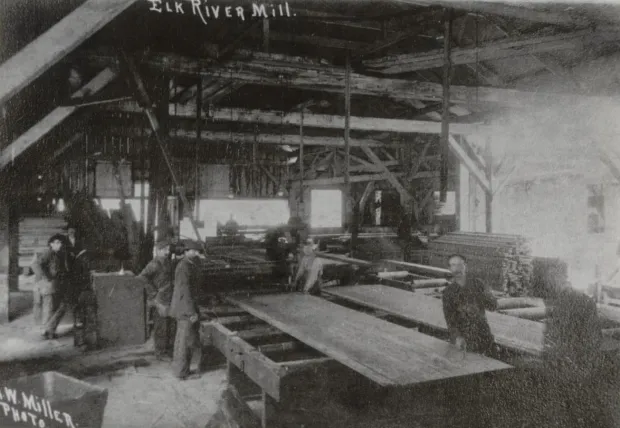
The Elk River Mill at Falk, early 1800s. Falk was located East of Eureka and was a major mill site in the pre-railroad days. It was abandoned in the 30’s and was reclaimed by the forest. (Image credit: Times-Standard/MediaNewsGroup/Julia Clarke, Bureau of Land Management)
As time went on, the logging industry changed. Technology got better and the machines got more powerful so you could cut, mill, and transport more efficiently with fewer workers. Transportation got better and it became more economical to ship the logs South to mills closer to the Bay rather than operate and maintain mills up here in the mountains. As the mills closed down, there was less need for loggers and the towns started to empty out. If you wanted to stay here, you had to find a different job.
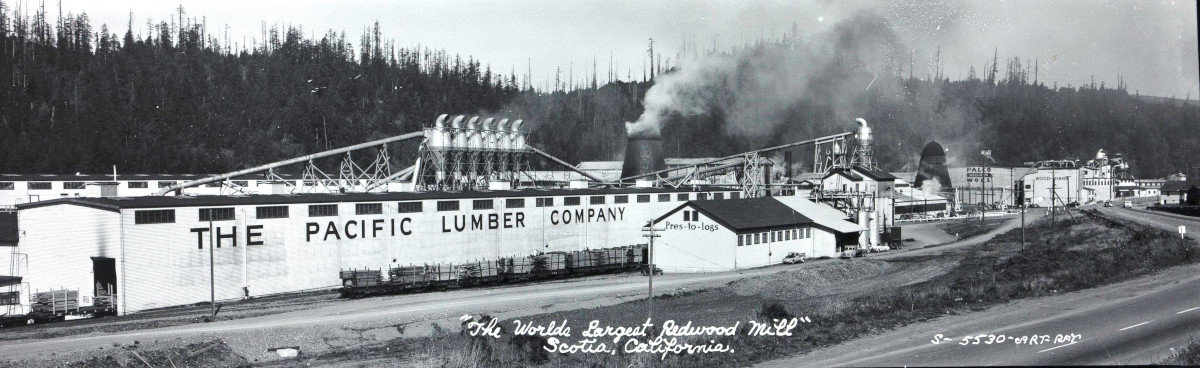
The Pacific Lumber Company mill in Scotia, mid-1900s. (Image Credit: Humboldt State University Special Collection Via Lynette’s NorCal History Blog)
Weed was always around in this area. Some people’s grandparents here and up in Trinity even had plants prior to the 60’s. It wasn’t really a big deal and nobody considered it an industry. After Vietnam and the government pushback against the counterculture, enforcement against weed increased dramatically, while the demand for it grew. The supply shrank because fewer people were willing to risk arrest to grow it, so suddenly it was a cash crop.
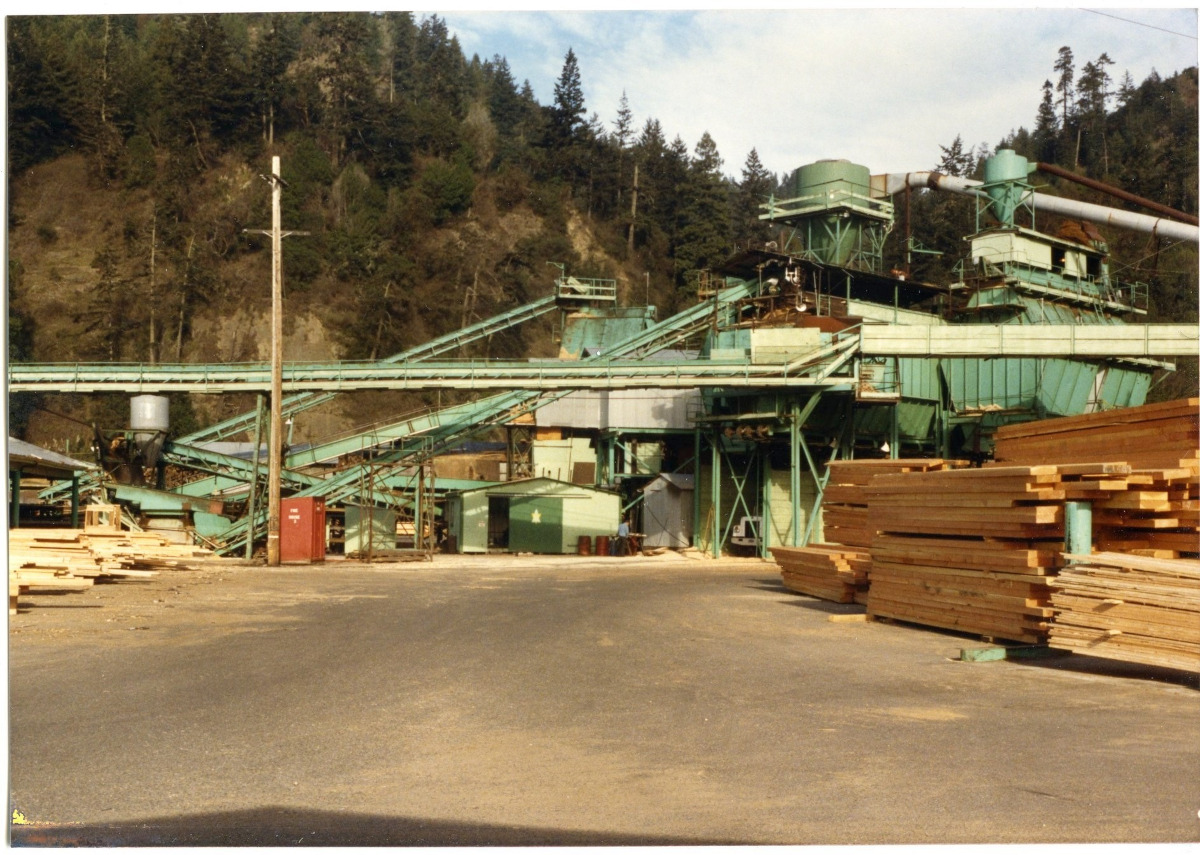
Eel River Sawmills “Mill A” in Rio Dell, 1989, when the logging industry was starting to decline. (Image Credit: Steve Haney, via Humboldt County Historical Society)
Loggers were always out in the forest, they knew it like the back of their hands and even had their own mythology about it- I remember them talking about Weevites and Pussyfours. Weevites were mischievous forest spirits, they’d steal your chainsaw or your gas can when you weren’t looking, and the Pussyfours… well let’s just say they were the female Weevites and these guys spent a lot of time out in the forest without any women around!
Anyway, with this new option to make money and good knowledge of the forests around here, growing weed was the perfect option for loggers who were out of work. They all knew the old logging roads, which ones were abandoned or accessible, where the good water was, where there were clearings in the forests, and where every gate and old logging camp was. They were professional foresters with deep knowledge of millions of acres of uninhabited wilderness, and so they took advantage of that to grow undetected out in the mountains. The efficiency of value for cannabis versus logging is incredible, you can make the same amount of money from one small grow that you can from acres of timber, and you can harvest the plants every season while trees take decades to regrow.
Naturally, the early cannabis industry was illegal and it was all underground. What was that like?
We grew up during the top of the CAMP helicopter raids.That’s the classic image right there. (Will gestures to a jar from Huckleberry Hill Farms in their display case with a classic silhouette of a Blackhawk helicopter on it.) When I was a kid I used to go out to the guerilla grows and my dad would tell us to hide in the bushes when a helicopter flew over. You can tell when you need to worry by the sounds of the rotors, they change pitch when the helicopter is turning around to come back over your grow or just flying past, so if you knew how to listen you could avoid them.
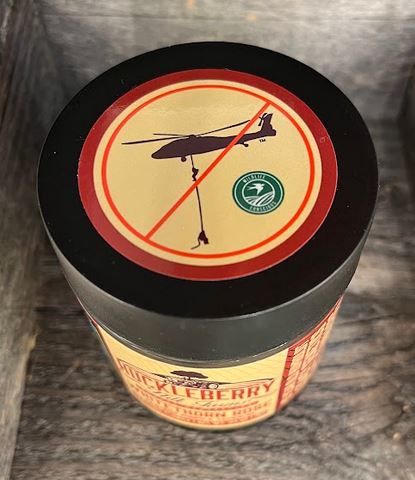
A jar of Huckleberry Hill Whitethorn Rose with the iconic CAMP Blackhawk silhouette on it- a reminder of the military operations against cannabis growers
It used to be a really militant deal, with guys in camo leaning out of the helicopter door with a machine gun, like they were there to fight a war against the hippies. It felt like we were being invaded and there was political activism against it. Back then people used to have “US Out Of Humboldt County” bumper stickers, and they were a big enough cultural phenomenon that even my friends on the East Coast saw them and asked me what they were about. Later on in the 90’s their whole set of tactics shifted to guys leaning out of the helicopter with a camera, circling to take pictures so they had evidence to bust you later. It was a huge mindset shift for veterans. In Vietnam, helicopters had meant rescue and evac, they were their guardian angels. Here in the Emerald Triangle they had to wrestle with the fact that helicopters were the enemy and the sound of rotors no longer meant freedom or salvation.
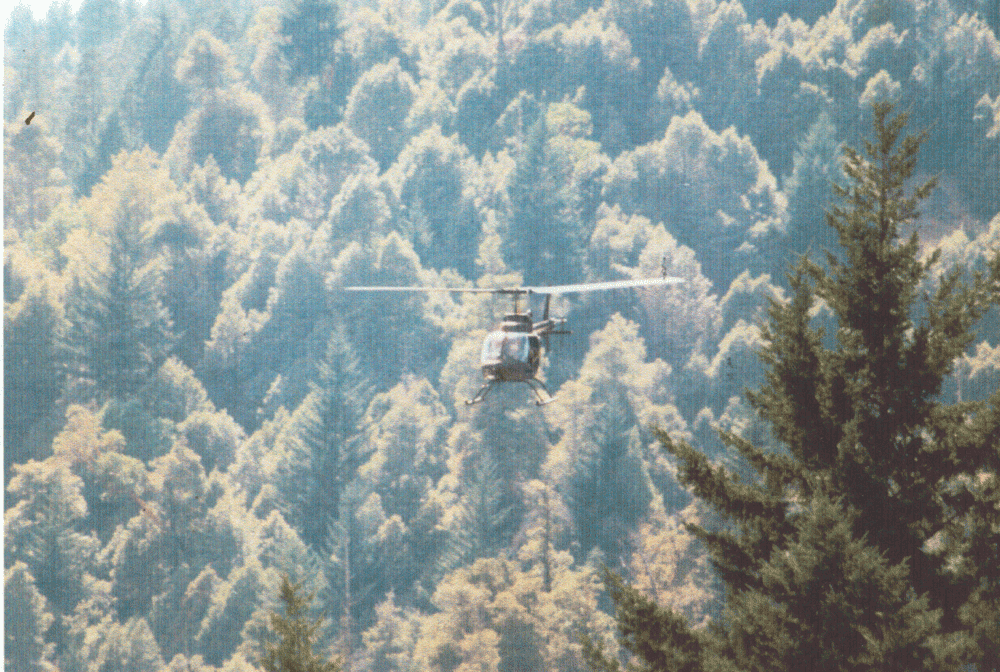
A Bell Huey threads through the canyon treetops (Image credit: Humboldt Area Archive CAMP-CLMP)
The economy of that era was different. A lot of the businesses here had some kind of money laundering operation. The profit from cannabis wasn’t being extracted from the community, it was staying local. Growers would pay local people high prices for stuff because the money came so easily, especially at $2,500 to $5,000 a pound. A long time ago for a school project, Faun interviewed Mr Bailey, the head of a major local logging equipment company. He called her into a back room and said “this is all off the record but even though I’m against the growers, I am who I am because the growers were all my loggers, and now they keep the local economy going.” That’s where the money around here came from for everything. The people who sold soil and grow supplies made the most money- just like selling picks and shovels during the Gold Rush.
So moving up to the present day, you’re running a legal farm and dispensary now. What was it like going legal and why did you decide to open a store in addition to your farm?
So we got into the early sheriff's zip tie program and we kept all the receipts which helped us get our license faster. The State was asking for everyone’s records, even stuff from before regulation. They wanted people’s receipts, which was funny because nobody wrote that stuff down before legalization, and wouldn’t share it even if they had! We got licensed soon after it was first legalized, but it took a while to get our full annual license. By the time that was complete, the market had crashed and small farmers couldn’t really make decent money without commercial partners or owning their own sales. The weed isn't where the money is now, it's basically worthless until it gets turned into a branded packaged product. Branding is the only way to make decent money now and how is a small farm supposed to afford the overhead for that? That's why we ended up going with the store, it was a new way to get into sales and own our branding. Once you have an economy of scale like the big farms you can make money, but we can barely afford to hire even one person without maybe running out of money.
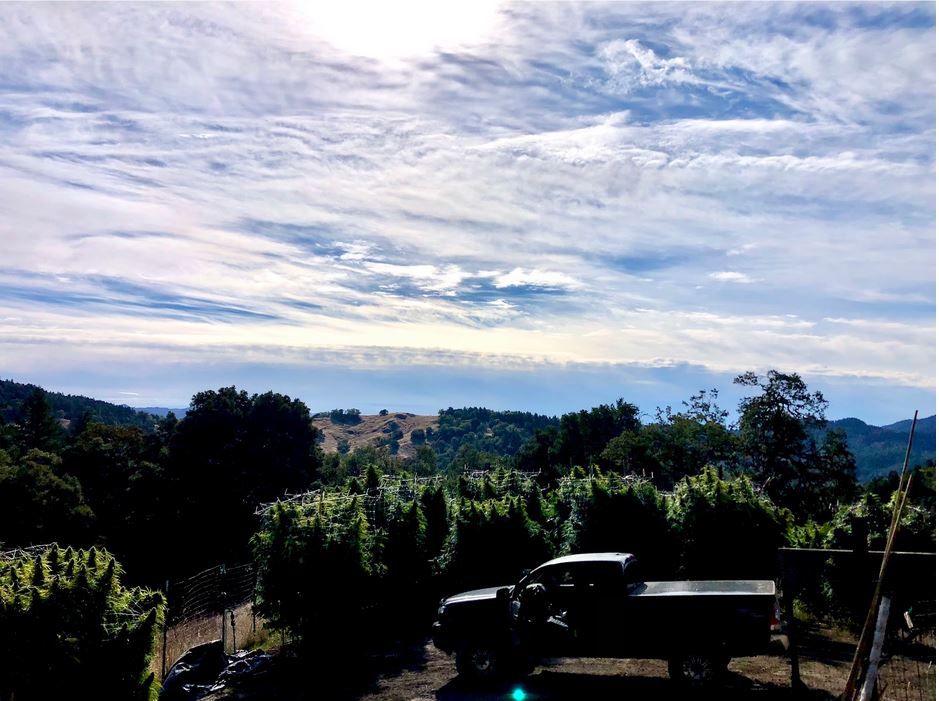
Big skies as seen from the Grandpa’s Ganj farm
It's taken about 2 years from filing to get this dispensary open. The County and State always seem to add new hurdles that you didn’t know about right when you think you’re about to get licensed. The state doesn’t know their own rules and can't tell you how anything is supposed to work, and it seems like the inspectors just make everything up as they go.
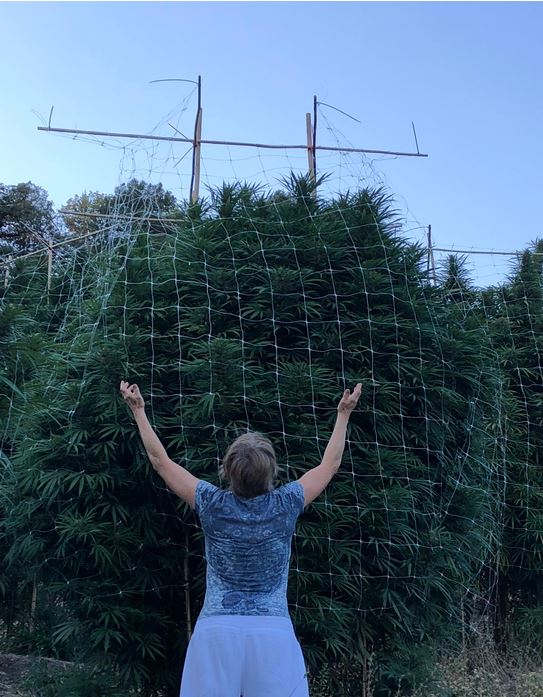
Arms outstretched for the big healthy plants at Grandpa’s Ganj
The economies of scale that huge farms get don’t really help small farms. The machine is always designed for the larger players in every agriculture industry; corporations were designed to be big enough to pay stuff off. The distance between farms and smokers created an uninformed market that corporate farms could corner with low quality and high volumes because people don’t actually know what good weed is anymore.
I’m not sure it’s something that we can easily fix. There’s now a market that’s developed around the current system. If California would decide to limit the corporate influence on farming, we might be able to gain back some of what we lost. All the growers up here who’ve been doing it for years- I have kids now so we’ve been doing it for 4 generations- haven’t really had a large impact on the greater state, most of our impact was on the local economy. Other parts of the state have their own thing, SoCal has its big brands started by people who think they’re drug lords and gangsters and that's how the branding and culture works down there.
So we’re sitting here in a historic old gas station, next door to the legendary Peg House restaurant. What’s the history of this place?
This gas station and the Peg House started as a mill site for split stuff like stakes and shakes. The store and station were built by the mill owner. It's called the Peg house because it was built mostly with peg joinery not nails. After a while our grandfather rented it out and operated it for years. We’ve seen the ownership change many times. Grandpa was an interesting guy with a temper and wasn’t a fan of the tourists. He was known to throw their gas caps across the highway into the ditch if they pissed him off. One time there was a lady who came in for a fill up. He filled up her car, but then she said “Oh I only wanted two dollars worth, not a full tank” so he went back into the garage and got a screwdriver and a hammer. He held the screwdriver up to her gas tank and said “That looks like about two dollars worth!” and offered to punch a hole in the tank to drain off the gas she didn’t want. She paid for it all and left of course!
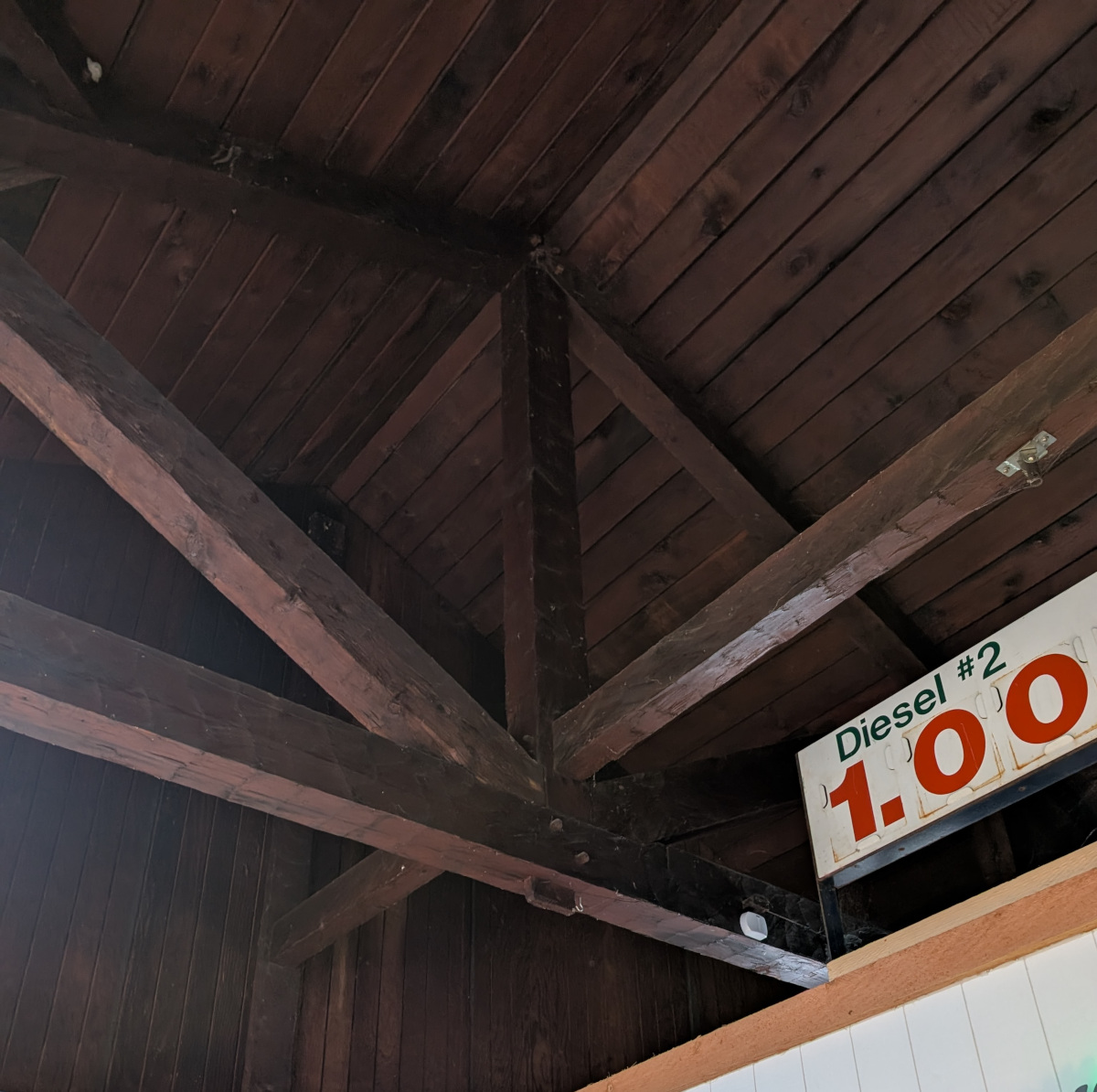
The namesake old fashioned wooden joinery in the roof of the Peg House gas station
He wasn’t always confrontational though, one time my dad and his friend were driving by and there was a bunch of Hell’s Angels parked out front. Naturally, they assumed Grandpa had caused a problem with the bikers and was getting his ass whooped, so they turned around and came back, but it turned out that they had made friends and were all just hanging out drinking instead of fighting.
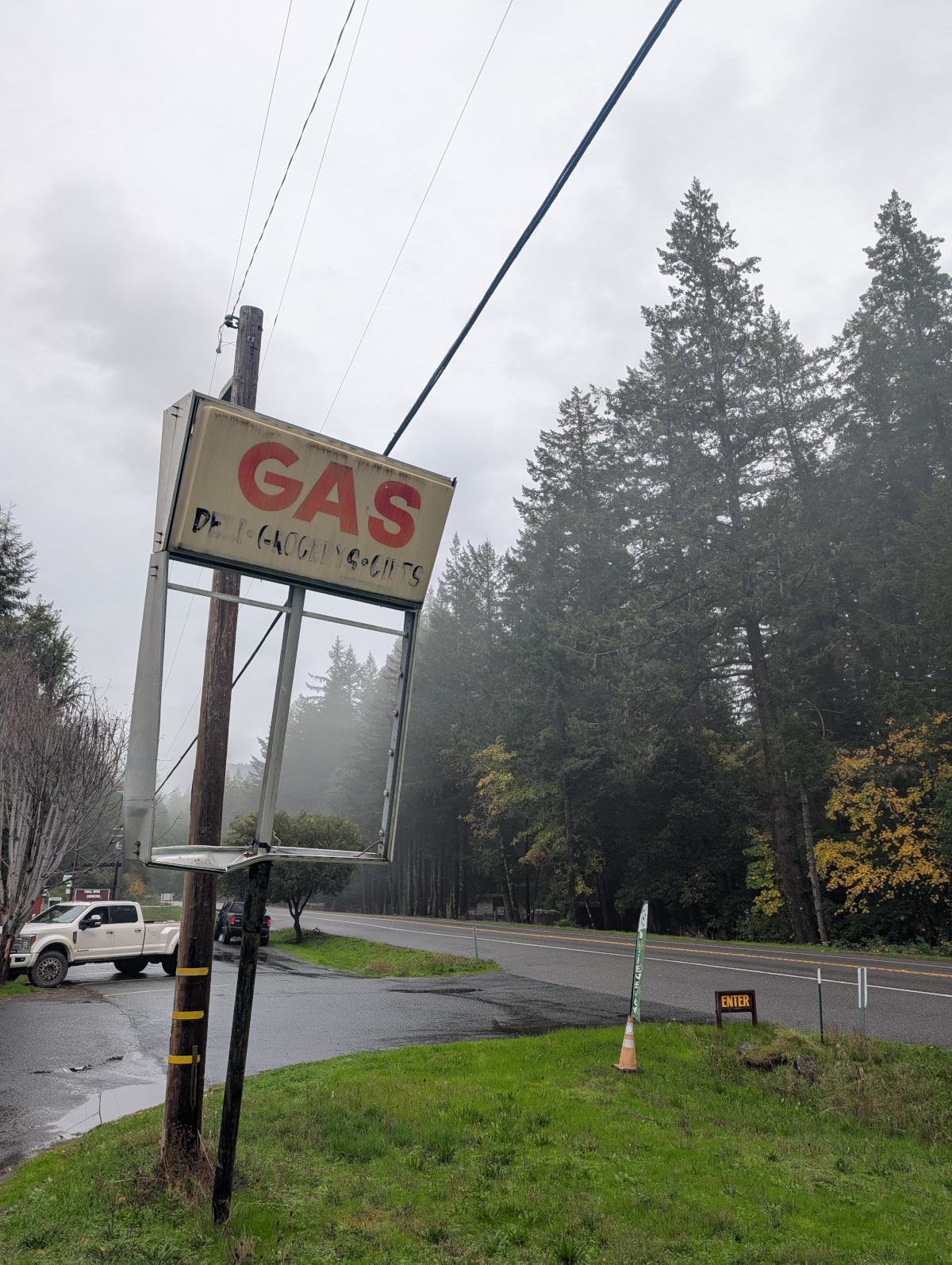
The old sign from when it was an active gas station
What do you want people to know when they come into your dispensary or buy cannabis from this region?
The main thing people need to understand is the depth of the history and culture behind the products we sell. If you just pop into the store quickly to get a cheap corporate brand joint and leave, you’re going to miss the cultural significance. It’s just like other agricultural communities but with a culture of secrecy. Everyone was always aware of outsiders. Asking someone “What do you do?” was always a taboo question. This was a haven for cannabis- imagine a culture of zero enforcement and how normalized and entirely open weed was. School teachers didn’t really mind how their students' parents made their money, they understood that the cops were the ones actually causing harm to the community.
That’s what Leggett used to be like. We went to parties as kids for the Superbowl or a birthday and people were smoking weed, hotboxing the entire place. It was normal for the kids to be around it, and a lot of us have early memories of being in gardens when we were very young. It was entirely outside the norm compared to the experiences of someone who grew up in a city. A lot of our parents who had been in Vietnam and suffered from PTSD were self medicating with cannabis and we witnessed those benefits first hand. Legality took away the need to isolate the culture here and now it’s shifting and dissolving, moving towards the lowest common denominator driven by sales rather than the community.
A funny story related to the local weed culture is the origin of the term “Skunk Weed”. If your grow was too close to the road, people driving by could smell it and that would blow your cover. One trick was to throw a roadkill skunk on the roadside by your grow and it would mask the smell. Normally if someone were to throw a dead skunk in front of your house you’d be pissed, but around here you’d say “Thanks for the skunk!”
What are your thoughts on genetics and strains?
Well, strains are kind of a load of shit, right? Back in the day they didn’t really have names, but with the different farms and regionality and microclimates, everything was super specialized so you could tell which farm something came from. If your property was big enough you could have two different outcomes growing the same seeds on one end vs the other, uphill or downhill, sunny or shady etc. We’re far enough apart with mountains in between that you’re usually not going to accidentally pollinate your neighbors' crop. People used to trade seeds and growers were constantly hybridizing, creating this huge diversity of genetics just in the region a few miles around us. We don’t grow huge crops and are isolated enough that we can really dial in a phenotype. Genetics are strong here but not necessarily by name- you know a person who always grows their weed a certain way and has certain qualities you can associate to their farm or methods but that’s about it, the names are just for marketing or bragging rights.
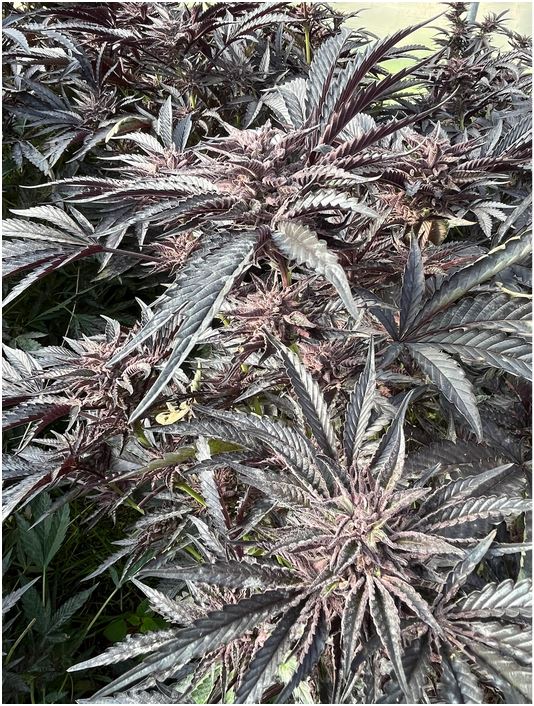
Some old school OG Purple
Buyers would change the names and mix stuff up because they wouldn’t always understand the product they had picked up. A long time ago I had some Sour Diesel and some OG clones, and some guy I knew wanted the OG, so I got him some clones to take back down South to grow. A while later he brings me a sample of what he grew and it has this strong Sour Diesel nose and I realized that I’d accidentally given him the wrong clones. He’d named it Will’s OG and was selling it like crazy, but nobody ever called him out on the smell difference!
Labs can tell more about the quality and the origin of products than sellers usually. I’ve talked to a few labs who test for a lot of extra stuff and different chemotypes. They can often tell which region stuff came from. The big ag regions like the Central Valley always have some level of pesticides in the environment so that shows up in tests. They see a clear difference in chemical content in the weed from the Triangle, it’s much cleaner with less ag contamination.
Closing Thoughts
Throughout the interview, customers came into the store. There was an eclectic mix- a tourist who thought the clearly defunct station still sold gasoline, an old head who wanted true Durban Poison or nothing (this is kind of rare these days so he left with nothing), and a few people staying at the campground across the highway who wanted some prerolls to enjoy on their trip. With this last group, Will emphasized their local offerings and said “We’ve got a few joints from out of town brands over there, but I’m not gonna sell you those today!” There was another guy whose truck was having issues and we all took some time to go out and help him out throughout the interview. The entire vibe of the place was completely different than your standard dispensary in a city- no rushing, no glitzy big brand signs, no massive wall of discount notices. I grew up not too far from here, and I remember what the old Geigers general store in Laytonville felt like, or the feed store on the way out to Branscomb. These old little mountain logging towns turned to cannabis cultivation have a specific feeling that’s hard to explain, and I felt that in Emerald Sasquatch.
Through it all, their dog Lady watched me like a hawk or laid by Will’s feet. When I asked about her, he laughed and said “I got her from the shelter in the city and now she lives out here and is friends with Sasquatch!”
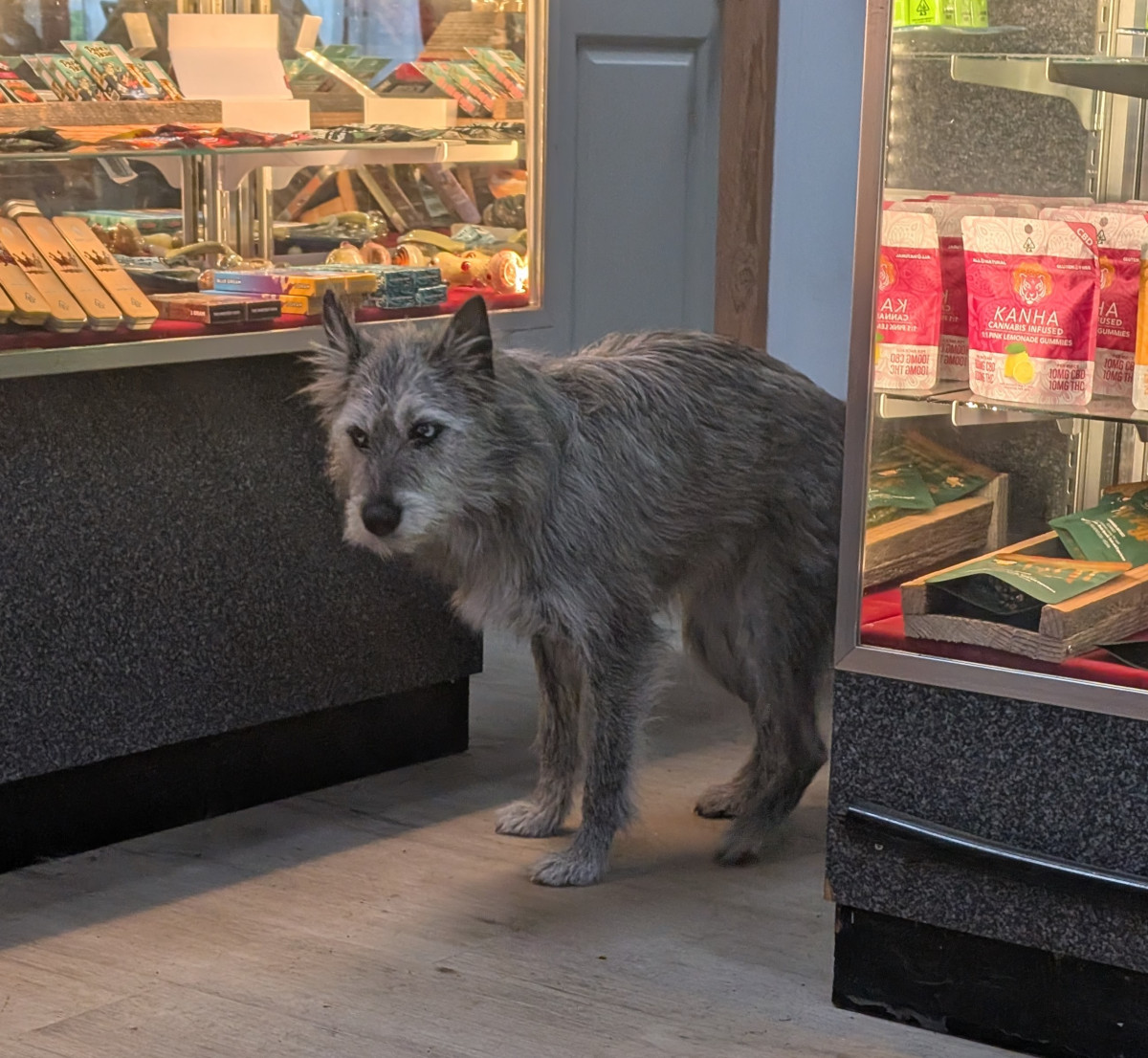
Lady keeping watch
Articles and interviews like this are made possible by the users and supporters of Higher Origins. Any California Licensed cannabis operator can sign up for Higher Origins here for free access to our menus, profiles, and Marketplace. We are committed to developing the best tools and solutions that we can to help get small farms to market and tell their stories. Any small operator that joins Higher Origins can get a free interview article like this one written about them, no strings attached. Telling these stories is important in an industry that devalues the origins of California's cannabis culture. If you have any questions or comments, feel free to reach out to us on Instagram, LinkedIn, or email us at [email protected]
Stay warm out there, and do it for the culture!
-The Higher Origins Team

Comments (0)
No comments yet. Be the first to join the conversation!